

Somato-emotional dysfunction Osteopathy and Focusing. Dino Muzzi D.O.
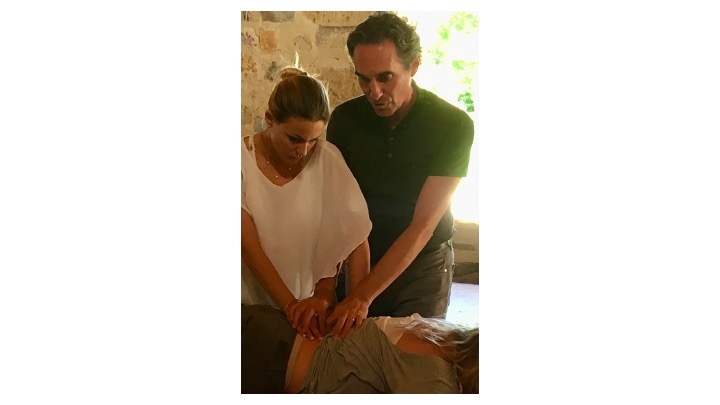
Somato-emotional dysfunction Osteopathy and Focusing. Dino Muzzi D.O.
Somato-emotional dysfunction Osteopathy and Focusing. Dino Muzzi D.O.
March 18-19-20 2027
For registration visite the site of the school at:
www.osteopathie-kolleg.com
In-Person Training Format
• Duration: 3 days (21 hours)
• Schedule: 9:00 a.m. to 5:30 p.m.
• Language: French translated in German
• Target audience: licensed osteopaths
Training Description
Everyone knows the importance of the emotional engram in the success of an osteopathic treatment. This three-day workshop is aimed at all osteopaths wishing to deepen the osteopathic approach to somato-emotional dysfunction. You will first learn to make the difference in your hands, between somato-emotional dysfunction and somatic tension. This approach, which combines osteopathy and focusing, is intended to be non-directive and leaves room for the profound emergence of the meaning and causes of dysfunction, without the participation of the mind. The therapist then becomes a tool by guiding the patient through the outcome of his tensions-emotions. No place for judgments, personal filters, interpretations on the part of the therapist and the patient; only the deep and unconscious part of the patient is expressed.
Focusing is a body approach to psychotherapy created by the American Eugene Gendlin in the early 1970s. It is mainly described by an attitude of attention to the feeling in your body: emotions, kinesthetic sensations as well as visceral perceptions. Gendlin defined “bodily felt sense”, a bodily sense that the body recognizes and can identify and associate with an emotion, tension or problem that the person is facing. The results of a clinical trial in a hospital in the United States, showed that focusing significantly decreased the symptoms of depression and resulted in a positive body attitude, compared to the control group (Katonah DG, Flaxman J, 2009).
After several years of practice, reflection and learning the Focusing approach combined with the practice of osteopathy, it is now clear that these two approaches combined, bring a very powerful and effective tool for the osteopath
Training Objectives
At the end of the training, the participant will be able to:
• Understand the relationship between somatic tensions and emotional components
• Differentiate a somato-emotional dysfunction from a purely somatic tension
• Integrate the principles of Focusing into an osteopathic approach
• Develop refined tissue listening in relation to the fascia
• Support the patient in releasing emotional tensions in a non-directive manner
• Adapt the clinical approach according to the patient’s capacity
Specific Objectives – Theoretical Component
At the end of the training, the participant will be able to:
• Understand the foundations of somato-emotional dysfunctions
• Explain the principles of Focusing and the “felt sense”
• Describe the relationships between fascia, emotions, and the nervous system
• Understand the basis of a non-directive, patient-centered approach
Specific Objectives – Practical Component
At the end of the training, the participant will be able to:
• Identify somato-emotional dysfunctions through palpation
• Use fascia as a clinical assessment tool
• Apply an appropriate treatment methodology
• Guide the patient in the exploration of bodily sensations
• Integrate strategies combining osteopathy and Focusing
• Adapt interventions to the patient’s rhythm and capacity
Training Plan
Day 1 – Foundations and Assessment
AM
• Introduction to somato-emotional dysfunctions
• Differentiation between somatic and somato-emotional tensions
• Introduction to Focusing and the “felt sense”
• Role of fascia in assessment, practical demonstration
PM
• Fascia-based assessment method
• Relationship between tensions and emotional components
• Initial practical applications: demonstration and treatment
• Focusing Exercise 1
• Focusing Exercise 1 combined with osteopathic treatment
• Theoretical integration of Focusing and osteopathy
• Clinical examples
Day 2 – Clinical Approach
AM
• Theory on emotions and their physiology
• Focusing Exercise 2
• Focusing Exercise 2 combined with osteopathic treatment
PM
- Emotions and pain: theory and practical exercises
- Focusing Exrcice 3, pain
- Clinical integration
Day 3 – Clinical Approach and Integration
AM
- Patient support techniques using potency and still point
- Treatment strategies combining osteopathy and Focusing
- Focusing Exercise 4
- Focusing Exercise 4 combined with osteopathic treatment
- Clinical examples
PM
- Concept of treatment as a whole
- Treatment exercises with the notion of globality
- Difficulty and solution
- Recap of the 3 days
- Contraindications to this approach
Teaching Methods
• Theoretical lectures
• Demonstrations
• Supervised practice
• Guided exercises
• Clinical discussions
Assessment Methods
Assessment is based on a continuous formative approach:
• Observation of participants during practice
• Active participation
• Integration of concepts
• Quality of execution and therapeutic presence
• Discussion and problem-solving related to encountered difficulties
A course evaluation questionnaire is completed at the end of the training
Instructor Biography
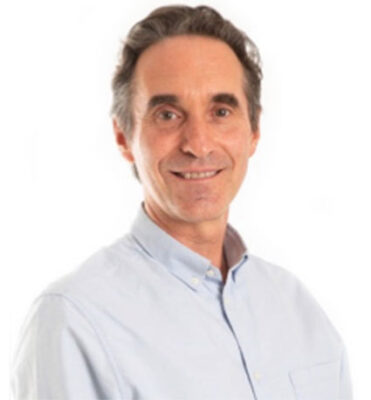
Dino Muzzi graduated in Physiotherapy from the Université de Montréal in 1985 and in Osteopathy from the Collège d’Études Ostéopathiques of Montreal in 1993.
Alongside his extensive clinical practice with a wide variety of patients, he has developed a strong passion for teaching and has been involved in osteopathic education for more than 30 years. He has collaborated with over twenty schools across 11 countries.
Over the years, he has developed particular expertise in the relationship between emotional processes and somatic dysfunctions, working closely with a group of psychologists specializing in trauma. Through this collaboration, he developed a specific osteopathic approach to somato-emotional dysfunctions that integrates osteopathy with the Focusing method.
He was also been involved with the Department of Justice in Quebec, contributing to the regulation and professional supervision of osteopathy.
Organisateur